

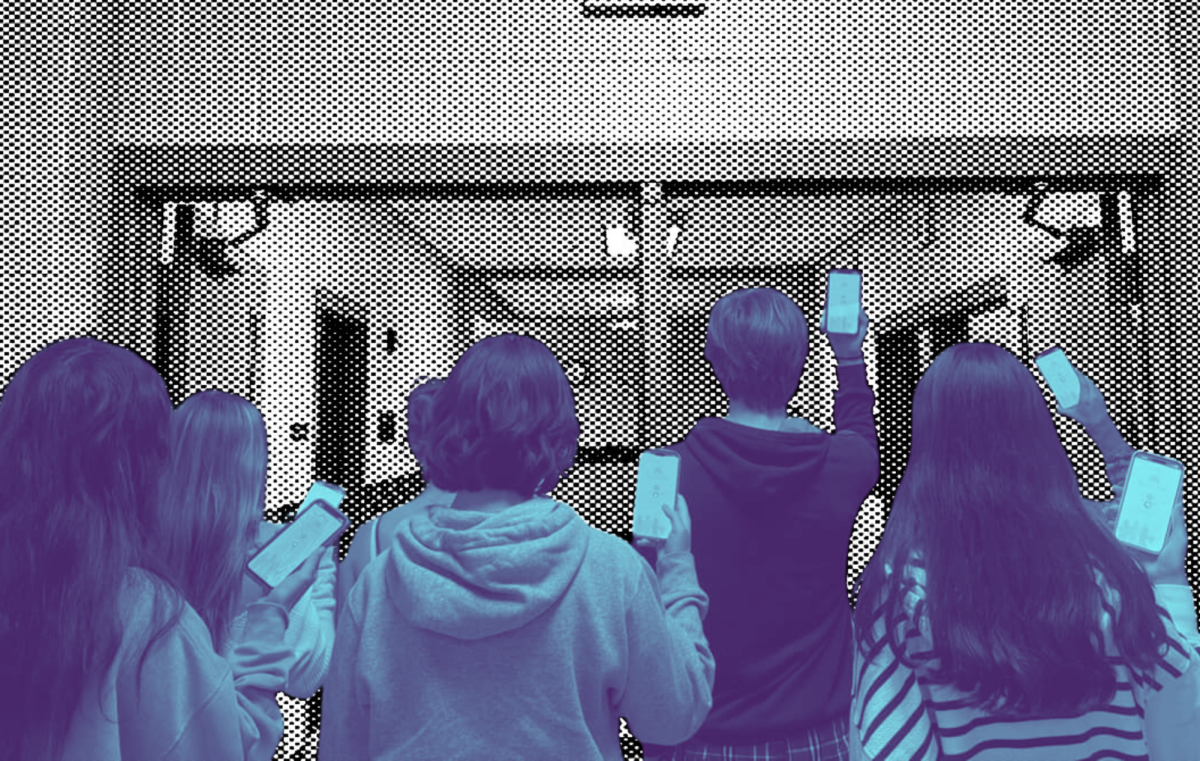
As the school bell rings, Alexandria City High School students rush to the doors of the cafeteria. All of them pulling out their phones and opening their Minga ID’s before waiting to be let in.
Lunch is intended to be a break from demanding classes for students to sit down and enjoy a meal, but some ACHS students think it’s often the opposite.
Having enough time for lunch has reportedly been an ongoing issue at ACHS, with Minga ID’s causing even more problems.
“It has gotten worse,” said sophomore Rachel Cooper. “I never had these problems last year. I feel like I had more time [at lunch] last year.”
Some students do observe slightly less restrictions in the cafeteria this year, for example, students are now permitted to exit the cafeteria from a door on either side rather than only one door on the left side of the room.
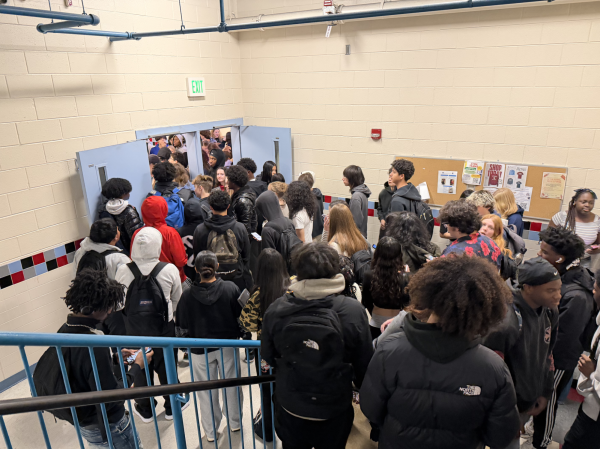
On the contrary, the long lines at the cafeteria can sometimes take just as long as last year.
“I don’t think it’s better, I think it’s worse,” said senior, Josette Fogden-Hernan. “There are so many people waiting for Minga to load and it takes way too long. Also, the Wi-Fi is bad here, so everyone’s waiting to be let inside. Overall, it’s just not good. ”
According to administrators, scanning Minga before lunch is necessary to alleviate the amount of crowding inside the cafeteria.
“It’s to make sure students are in the right lunch block, keep students from coming in and having 2-3 lunches and also it impacts how many kids are in A, B and C,” said Rhea Butler, Dean of Students. “Otherwise we have people coming in from other lunches, that’s why it was so crowded sometimes.”
Stickers appear on Minga that show what lunch block each student is supposed to be in, ensuring that no one sneaks into an extra lunch period.
After scanning Minga, students who buy their lunch at school have to wait in the lines for food. When timed by Theogony, it can take around five minutes to get into the cafeteria and at least an additional five minutes to get food in most cases. After this, students are left with roughly 20 minutes to eat their lunch, excluding the time they lose if they have to leave early to catch the transfer bus to Minnie Howard.
“Lunch is usually cut short by at least five minutes so I can catch a bus to Minnie and try not to be late to my next class,” said Sophomore Audrey Stouffer.
For the 2025-2026 school year, ACHS implemented a modified bell schedule giving students a buffer to walk to the cafeteria, wait in line to show their Minga ID and buy lunch, while still having sufficient time to eat before returning to class.
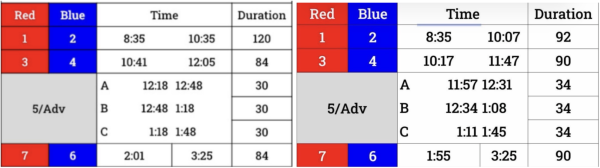
This buffer includes more time for students to transition to lunch and to class, however, some students are still unhappy. According to Senior Eliana Hartman, students still feel rushed.
“It can be difficult with only a 30-minute period, not even including getting lunch from the lunch line and cleaning up at the end,” said Hartman.
The U.S. Centers for Disease Control and Prevention advises students to have a minimum of 20 minutes of uninterrupted sitting time during the school day to eat. Additionally, the School Nutrition Association suggests 30 minutes for middle and high school students.
Last school year, the most prevalent disruptions were the presence of a long line outside of the cafeteria at King St Campus, the extreme restriction for students when they are in the cafeteria and the Minga ID requirements.
When asked why people think it takes so long to get into lunch, many students attributed the issues to the slow wifi around the cafeteria. Students have found that the entrances to the cafeteria are “deadspots” for their cell phones.
“For some reason the WIFI is only really bad during lunch and when students are in front of the cafeteria,” said Sophomore Clara Kwakye. “Many students utilize their phones for Minga and with the Wifi being turned off no one can actually get into the cafeteria on time and all the students being stuck outside creates the sense of chaos.”
Minga waits on a loading page if it’s opened in these areas with bad connection, and students have to wait outside the cafeteria until either their phones load or until an administrator looks them up in their system. Many administrators acknowledge the prevalence of this issue.
“I think there’s some glitches, sometimes it won’t upload,” said Butler. “I think it is sometimes a wifi issue when you have to pull up your Minga.”
Although alterations to the schedule have been made, along with other efforts by the school administrators, some students still report that much more improvement can and must be done.
“People going to lunch are hungry, impatient and anxious to get their food,” said Sophomore Annette Bawcombe. “This system just makes it all so chaotic.”