

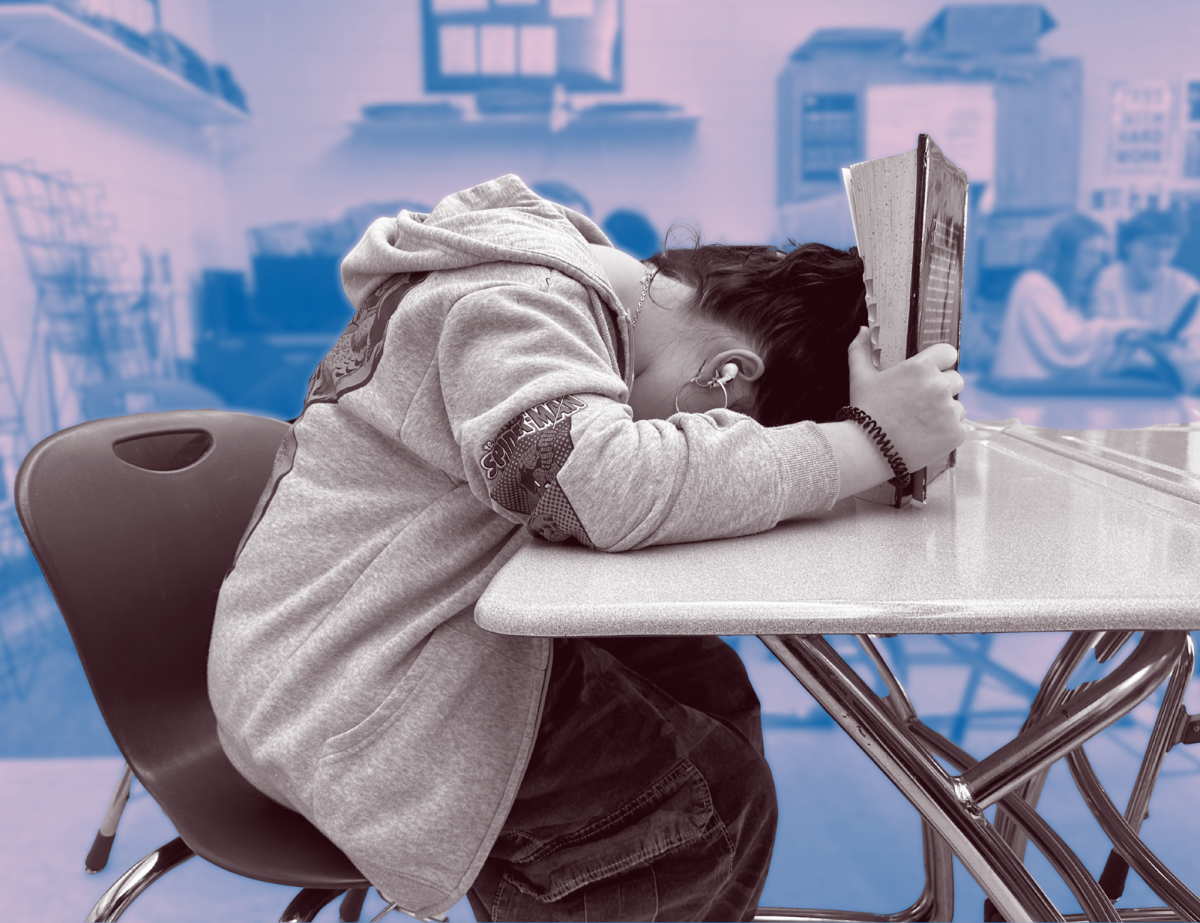
The average person between the ages of 13-18 should receive nine to nine and a half hours of sleep per night. However, many students at Alexandria City High School have admitted to rarely meeting this standard. This is a growing issue, as adequate sleep is crucial for brain development and growth especially at young ages but is hardly ever achieved.
When asked how many hours of sleep they average per night, most students’ answers fell below the national average of seven to eight hours. “Probably five or six hours,” said junior Julia Diehl.
“Six hours,” said junior Carter Thabet.
According to The National Sleep Foundation, these low levels of sleep can result in inefficiency throughout the school day due to increased mood swings, emotional reactivity and stress levels among students.
“I feel like every day I’m exhausted and I can’t fully function,” said sophomore Anna Mulhern. “And, I get stressed about homework.”
Students such as Diehl and Mulhern believe that not getting enough sleep is a direct result of students’ overwhelming schedules and obligations including sports, clubs and homework. While their schedules may vary, homework seems to be a constant contributing factor to these low levels of sleep.
“It’s hard to concentrate in the mornings. I feel dizzy most of the day, it’s harder to participate in extracurriculars, and I’m less likely to interact with other people,” said senior Megan Trueblood.
Students claim that their sleep deprivation is a direct result of heavy workloads and frequent tests.
“Whenever I have a test—which I often do—I’m usually suffering from low sleep, so when I get to school, my brain can’t work fast enough,” said sophomore Christine Ambaye.
When asked how to fix this issue, students proposed solutions such as using class time more effectively, limiting homework assignments on weekdays, and bringing back Titan Time, the 30-minute advisory period at the beginning of every school day.
“Giving more [advisory] time in order to reduce workload stress would help to increase student sleeping,” said junior Carter Thabet
“When teachers are assigning large amounts of homework, they should assign it so students are able to do it over the weekends instead of having to do a lot of homework on weeknights when they’re more busy,” said junior Ann Carr.
Junior Ingrid Schildknecht proposed many solutions, emphasizing her idea that “the school should bring back 3:15 p.m. release.”
Senior Ricky Ward proposed an alternate solution of starting school later in the day because “a lot of teenagers are used to staying up late and waking up late.”
Students also addressed the increasing presence of social media and how it impacts their sleep levels. Specifically, “doomscrolling,” or continuously watching short videos on various social media platforms such as Tiktok and Instagram, is another contributing factor.
“I think having access to social media decreases how much sleep you get because we’re on our phones too much,” said senior Leighton Sutter. “After a long day of school and doing homework for hours, I like to sit on my phone for an hour before I go to bed.”
Describing sleep and school as a perpetual routine, Diehl believes that playing varsity soccer, as well as her continuous flow of school work, greatly contributes to her drowsiness during the school day.
“I feel a lot more tired throughout the day and by the end of the day, I just want to take a nap because I’m so tired,” said Diehl. “I don’t even want to do my homework. But I have to. It’s a never ending cycle.”