

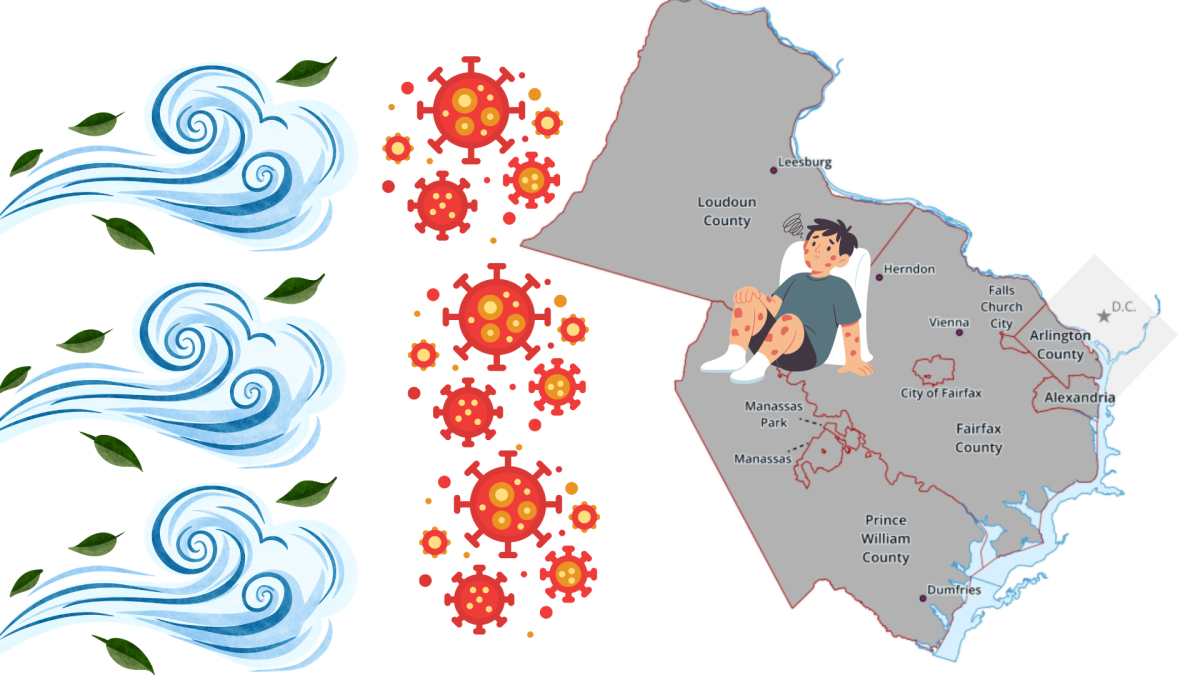
Measles, a highly contagious viral disease once rare in the United States, has appeared in Northern Virginia, including Alexandria, prompting health officials to warn residents and encourage vaccinations.
According to the Virginia Department of Health, 10 measles cases have been reported statewide in the first two months of 2026— nine of them in Northern Virginia. According to the Virginia Department of Health (VDH), this already exceeds Virginia’s total number of cases for all of 2025, and double the number of Northern Virginia cases in 2025. The VDH has identified several potential exposure sites in Alexandria and surrounding communities, including stores, restaurants and other public locations. Residents who may have visited those places during specific time frames are being urged to monitor for symptoms.
Location and times of measles exposure in Northern Virginia
- Office building: 2800 Eisenhower Ave. in Alexandria, between 10 a.m.-1 p.m. Tuesday Feb 17
- Target: 9900 Sowder Village Square in Manassas, between 6:30 – 9 p.m. Sunday, Feb. 15
- Bull Run Unitarian Universalists: 9350 Main St in Manassas, between 7:30 – 11:30 a.m. Saturday, Feb. 14
- Harris Teeter: 10060 Market Circle in Manassas, between 5 – 7:30 p.m. Friday, Feb. 12
- Walmart: 9401 Liberia Ave. in Manassas, between 5:30 – 8 p.m. Friday, Feb. 13
- Medical Center: 051 Heathcote Village Way in Gainesville, between 1 – 4 p.m. Monday, Feb. 16
- Lidi: 9795 Liberia Ave. in Manassas, between 2 – 4:30 p.m. Sunday, Feb. 15
- Marco’s Pizza: 9223 Sudley Road in Manassas, between 6 – 8:30 p.m. Friday, Feb. 13
- Mountaintop Church: 9213 Center St. in Manassas, between 4:30 and 11:59 p.m. on Saturday, Feb. 14 and between 11 a.m. to 4 p.m. on Sunday, Feb. 15
- Best Buy Outlet: 7665 Sudley Road in Manassas, between 2 – 5:30 p.m. Saturday, Feb. 14
Measles is one of the most contagious viruses in the world. The Center for Disease Control and Prevention says that if one person has measles, up to nine out of 10 unvaccinated people nearby can become infected. The virus spreads through coughing and sneezing and can remain in the air for up to two hours after an infected person leaves an area. Symptoms usually begin with a high fever, cough, runny nose and red, watery eyes. A few days later, a red rash typically spreads across the body. Although most people recover within a few weeks, the disease can cause serious complications such as pneumonia and swelling of the brain, especially in young children.
In an interview, King Street nurse Maria Camejo said, students and families should be concerned about the recent measles cases in Northern Virginia because the virus spreads even more rapidly when vaccination rates are low. “This can spread widely if we’re not protecting ourselves,” she said. “It can affect communities, and the school, staff and students.”
She encouraged families to make sure their vaccinations are up to date and said awareness is important in preventing the illness.
“Stay away from affected areas and do research about measles,” she said. “And [It’s so] important to get vaccinated and improve your hygiene overall.”
She also detailed the thorough process that would be required if an ACHS student were diagnosed with measles. She said the school would first check if the student is up to date on vaccinations and determine the last time the student attended school. The school would then notify the health department and begin tracking the student’s attendance and classes to identify possible exposure, including reviewing class rosters of nearby students. The student would need to stay home for a period of time and provide a doctor’s note after the diagnoses confirming the unless has cleared before returning to school.
Health experts say vaccination is the most effective way to prevent the disease. Two doses of the measles, mumps, and rubella vaccines are about 97% effective at preventing infection, according to the CDC. Most of the recent cases in Virginia involve people who were not fully vaccinated. Officials note that measles was once eliminated in the United States because of high vaccination rates, but can return when vaccination coverage drops or when international travel brings the virus into communities.
The VDH is continuing contact tracing efforts and notifying individuals who may have been exposed. Families are encouraged to check their vaccination records and contact a health care provider with any questions. As measles cases continue to appear in Alexandria and nearby counties, public health leaders stress that staying informed and up to date on vaccinations can help prevent further spread.


