
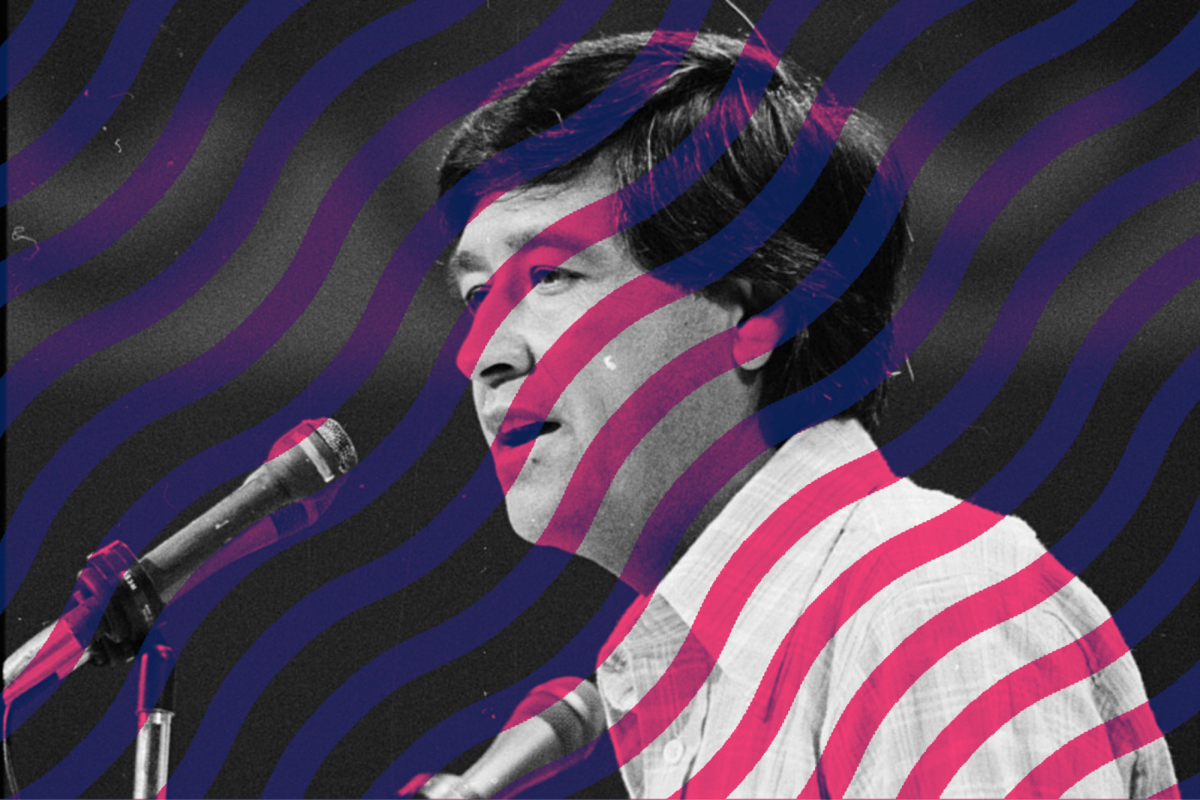
At Gov. Spanberger’s inaugural parade, I yelled “Si se puede” in honor of Cesar Chavez. I did this to show how happy I was that Virginia had turned blue and that we finally got a female Governor, but now I regret it. If history has taught us anything, it’s that movements should not be built around a singular person. For generations, Chavez has been taught as a hero, an icon of justice. He was a renowned labor organizer, who was seen as fighting for the dignity of farmworkers in the 1960s. Because of his leadership in uniting farmworkers in the struggle for labor rights, his legacy has been presented as close to untouchable for decades. So much so that many Latinos chose to ignore his openly xenophobic behavior.
But history is not immutable, and neither are the people we choose to honor. Recent revelations have brought forward disturbing allegations about Chavez’s conduct toward women in his circle. Among them were his former second-in-command, Dolores Huerta, who said she was sexually assaulted by him during the peak of United Farm Workers’ activity. But she was not the only one. Huerta explained she remained silent for more than 60 years out of the fear that speaking out would damage the farmworker’s rights movement that she had dedicated her life to. These accounts are shaking up the perception of a legacy that many were taught to not question. We, Latinos, have constantly been betrayed by “leaders” who build cult-like movements around them, not just in America, but in our motherlands. To continue to justify these horrible actions sends a message that victims should just stay silent, that the health of a movement matters more. But what movements of justice ask victims to stay quiet? What kind of justice is that?
This is a moment where we must reflect on how honestly we confront the heroes we used to loudly celebrate, like I did. Therefore, the legacy of Cesar Chavez cannot be forever celebrated. If we are serious about justice for victims of sexual assault, then accountability cannot be selective. It cannot apply only to figures we already dislike. It must apply even—and especially — to those we look up to. This isn’t about erasing history, it is about refusing to sugarcoat it.
I know a lot of Latinos are upset at this betrayal. I am as well. As the President of Latinos4Latinos at Alexandria City High School, the son of a labor union member, and a Mexican-American, I grew up with the mentality of “Si Se Puede,” that I can accomplish everything I set my mind to. I am now disgusted by the thought of it. Unlike many, I cannot separate the art from the artist. I understand what leaving behind the legacy of Chavez means to people: we’re scared to lose a figure whose leadership serves as a model to navigate the current racist Trump administration. People are worried that denouncing Chavez and his legacy puts the “Si Se Puede” mentality into the abyss, and that we will lose faith in whether we can fight back against modern-day injustice.
But the farmworker movement was never just one man, and we can still accomplish everything we set our minds to.
That movement was built by thousands of people, including the women who came forward about Chavez. Their voices need to be heard, not overshadowed. Their contributions deserve recognition. We are left with a difficult but necessary truth: a person can help change the world and still cause harm. Pretending otherwise does not undermine a movement of thousands, it strengthens it.
I still see so many Latinos online, and in person, trying to keep Chavez’s legacy alive, which is unfortunate. It’s not a secret that the Latino community tends to victim blame. Like Huerta said, it is the Machismo. If we want a future rooted in justice, we have to start by accepting the truth of our past. That starts with eradicating the legacy of Cesar Chavez.
With deep sadness but great hope,
Darwin Salazar
President of Latinos4Latinos+Allies