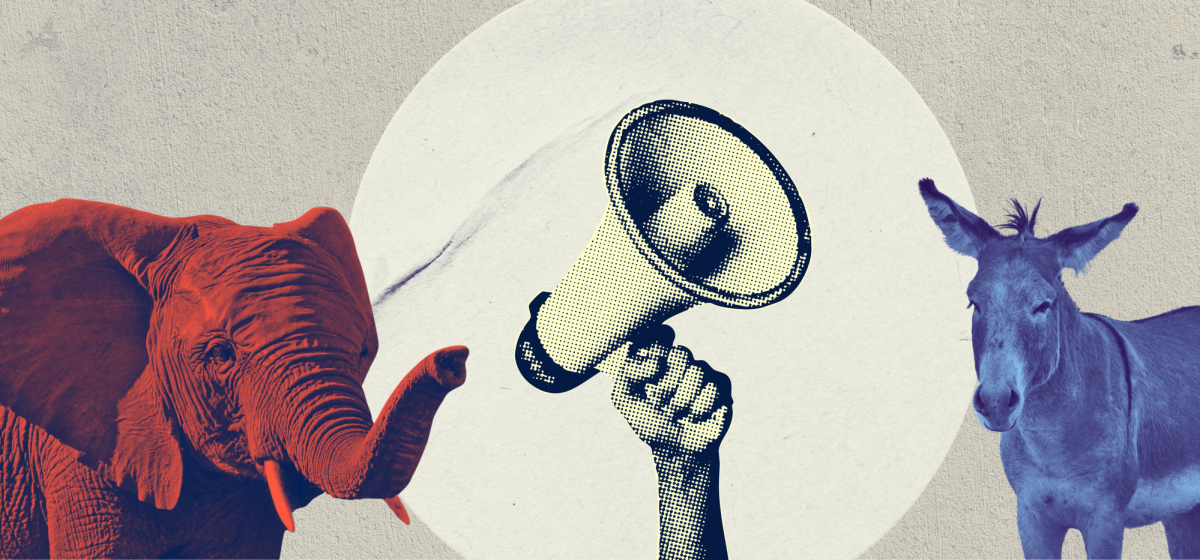


What is Populism?
The definition of populism is contested partially because it is a thin political ideology, meaning it does not have stand alone beliefs. Populism emphasizes protecting “the people” and weakening “the elite.” Who qualifies as “the people” and “the elite” typically changes based on the larger goals of that party or politician.
For example, in Cambodia, under Prime Minister Pol Pot, “the people” were the rural workers and ”the elite” was the urban population, the intellectuals, and any person considered “bourgeois.” However, this is an extreme example, as most populists are not genocidal dictators, but instead “regular” politicians.
Populism latches onto pre-existing ideologies, often radical left and right ones. They use fallacies and well meaning, but harmful rhetoric to attract voters. One example of populist rhetoric is the statement that a rent freeze will decrease rent prices, this was a political campaign promise of Mayor Mamdani. A rent freeze will do the opposite. Landlords often abandon properties once they cannot sustain themselves because managing the property takes more money than tenants are paying. In NYC, 50,000 homes are vacant because of rent freezes. Voters of populists are most often uneducated or have a lower education.
Populism becomes a threat to democracy when it starts to undermine the rights of their opposition. As an example, recently, the Department of Justice brought up the idea of restricting transgender people’s access to guns. This is very clearly trying to weaken the people who will most likely be in opposition to the Trump Administration.
How and Why Did Populism Rise in Popularity?
Populism most often increases in popularity during an economic crisis. For Viktor Orbán (right-wing populist) it was the economic crisis Hungary faced in 2008 and 2009. For Hugo Chávez (left-wing populist) it was the collapse of oil prices in the 1980s.
Economic crises cause a population to feel frustration and anger with their undesirable economic situation. Populists come along and give the population a scapegoat, which gives the people something or someone to blame for their hardship, even if it doesn’t make that much sense.
Most modern American populists have gained significant popularity after the Great Recession (which lasted from 2007 to 2009) and the COVID-19 pandemic, both of which entailed the mass unemployment and other financial crises caused by both events.
The American Right and Populism
Right now, the prevailing form of populism in America is Trumpism. The term “Trumpism” was coined by political commentators in 2016 to differentiate Trump’s political beliefs from “traditional conservativism.”
Trumpism is characterized by a belief in economic protectionism and nationalism. The populist part of Trumpism is the demonization of the liberal elites who allow undocumented immigrants to live off welfare paid by the people and the uplifting of the working class Americans.
Examples of Trumpism
One of Trump’s 2024 presidential campaign promises was protective tariffs. Tariffs are taxes on imported goods. He has stated these will bring back manufacturing to the US and encourage Americans to buy US-made. He believes this will benefit blue collar Americans and hurt the liberals who outsourced American manufacturing. While it may encourage Americans to buy US-made, protective tariffs will do much more harm than good. Tariffs will increase the price of foreign goods, and in response domestic companies will increase their prices because they have less competitors. Domestic companies will decrease their productivity because they rely on protection to keep them from having more competitors. These factors cause the economy to shrink, which causes more unemployment, more failing businesses, and less consumer spending.
When running for senator in 2018, Ted Cruz promised to grow Texas’s economy through increasing oil and natural gas extraction. Cruz said this will increase jobs and benefit working class Texans while getting back at the liberals who want them to shut down their oil and gas extracting sites. While increasing oil and gas extraction may grow the economy, it is one of the worst ways to do so in terms of energy. Oil is one of the least cost effective ways to create energy. Oil is only profitable when the price of one barrel of WTI oil is above $60-$65 (currently the price of one barrel is $65). The volatility of oil makes it a horrible investment. Oil is one of the dirtiest forms of energy. Though natural gas extraction (fracking) is more cost effective and relatively cleaner than oil, it still has its problems. Fracking leads to increased risk of cancer to the people living near a fracking site, more earthquakes, contaminated water from fracking fluid, and water depleted from groundwater drinking sources (Yale School of Medicine and Environment America).
In 2022, when running for reelection as South Dakota’s Governor, Kristi Noem advocated for decreasing the stigma around mental health. Noem advocates for mental health because many regular South Dakotans have experienced it or have friends who experienced it, but she attacks transgender and other LGBTQ+ individuals because they push liberal ideas. She regularly attacked transgender youth while in office, who are some of the most vulnerable to mental health issues. Allowed discrimination against LGBTQ+ individuals under the guise of religious freedom. She claims to care mentally ill South Dakotans, but turns around and attacks some of the most vulnerable individuals in her state.
The American Left and Populism
Democratic socialism, often confused with social democracy, is the most popular brand of left-wing populism in the U.S. today. The most popular democratic socialist politicians are Senator Bernie Sanders, Mayor Zohran Mamdami, and Representative Alexandria Ocasio-Cortez.
Democratic socialists typically believe in the communal ownership of the means of production, while maintaining a democratic system, which distinguishes it from traditional socialism. The populist component of democratic socialism is demonization of billionaires, and other wealthy elites, while simultaneously uplifting the working class.
Examples of Democratic Socialism
As part of his Wall Street Reform, Senator Sanders promised to work towards capping credit card interest rates at 10% to stop the exploitation of working class Americans by the Wall Street elite. This cap will do the opposite of Sanders wishes. Banks are businesses, so they will stop offering credit cards to people with subprime or even fair credit because it does not produce revenue for the bank. Millions of Americans will lose access to credit cards (majority of Americans have credit cards). Credit cards are one of the best ways to improve credit, but with millions of Americans losing access to them, it will be extremely difficult to improve their credit score. Instead of helping millions of Americans, Sanders will prevent those same people from accessing credit cards.
Just last year Zohran Mamdani ran for Mayor of New York City. Despite running for a relatively small political position he was big on social media. One of his campaign promises was city run grocery stores that have lower prices than private grocery stores. He has said taxes from New York billionaires will pay for the decreased cost for the working class. First issue with his proposal, he does not have the power to tax income as Mayor. Second, it will force the closure of small and independent grocery stores. They have no ability to compete with the Government paid stores, so they go out of business. This will give the government full control over grocery prices. If the city government wants more money, they can charge more for groceries. Instead of redistributing wealth, state run grocery stores cause more financial stress on the lower and middle classes.
Ocasio-Cortez has advocated for allowing undocumented immigrants to become citizens easily by just documenting them. Ocasio-Cortez poses undocumented immigrants as completely innocent people who just want to better their lives and rich conservatives want them out of the country because they are racists. While I do not completely disagree with Ocasio-Cortez beliefs, she shows an ignorant view of undocumented immigration (both parties do). Ocasio-Cortez has not seemed to propose how the US would go about documenting around 14 million undocumented immigrants (2023 estimate). Going about documenting 14 million people would be extremely costly and would require significant resources. The government can not force undocumented immigrants to register, so results would be uncertain. Ocasio-Cortez also fails to consider why so many people give up their previous life to immigrate and how to help them get a better life at home. She seems only to advocate for documentation of undocumented immigrants because she believes it’s morally superior, not because she cares about them.
How to Avoid Populist Rhetoric
There is no one way to avoid populist rhetoric. Here are some of my recommendations:
- Avoid politicians or rhetoric that links identity (gender, race, ethnicity, sexuality) to party alignment. This language is used to create a common identity among a party and uses that identity to attack those not like them.
- Extend your hand across party lines and encourage others to do so. This will prevent you from becoming a victim of the increasing polarization of the US. You will see people are not as different as populists politicians would like you to believe.
- When talking to people you politically disagree with, talk about solutions to problems both of you have. This allows the possibility of compromise and healthier arguments.
- Advocate for narratives unifying Americans. As I stated previously, we have more in common than we think. We all have similar common values.
As many of us will soon be allowed to vote, it is our job to not lose sight of our unity and our common values.