
Curtis Mayfield sounds as if they’ve got a funky sound with a story you’d tune your radio to, and Mayfield was definitely that type of sweet you would have wanted to tune in for. Curtis Lee Mayfield, born June 3, 1942 in Chicago, Illinois, was mainly raised by his mother, Marion Washington, and grandmother, Reverend Annie Bell Mayfield. Being raised by them would help blossom his love for music, as his mother would frequently play gospel records, and teach him how to play the piano.
Throughout his childhood, Mayfield grew up in different public housing projects around Chicago, including the famous Cabrini-Green. Being raised there in the heart of one of the most bustling cities in the United States would introduce him to a wide array of gospel and blues music. The majority of gospel music he would hear would originate from the Traveling Souls Spiritual Church, where his grandmother preached and where he sang choir as a child. He would also sing with the North Jubilee Gospel Singers, a Chicago-based music group, at the age of seven.
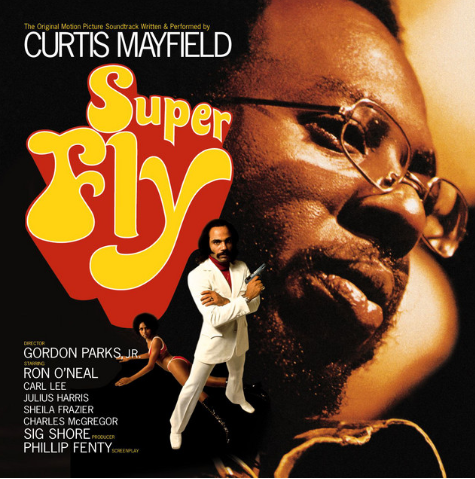
While the blues he experienced came from the Iconic McKinley Morganfield, better known as Muddy Waters, Mayfield would admire him so much that he would model his guitar style after Waters. With his love for music and skills he gained as he grew up, he would drop out of high school at age 16 and focus on his music career, joining a band called The Roosters. Though only being with the band for a few years, Mayfield would go solo, start a label company called Curtom Records. There he would make a wide array of songs and records, with one of them being the most significant and influential albums of the time, “Superfly.”
“Superfly” would be made to be the soundtrack for a 1972 film under the same name, about a young priest and a Harlem dealer setting up a massive final deal to finally leave the crime underworld. Mayfield was picked for making the songs because he would provide a bona fide, gritty socially conscious soundtrack that contrasted with the high life portrayal of dealing. So here’s a review of the current top three “Superfly” standout songs from Curtis Mayfield’s album.
“Pusherman” is the second song on the album. To put it simply, it’s commentary that highlights how illegal activities alongside desperation start to come up due to poor socio-economic conditions, over top a nice simple early 70’s funky beat. Now it’s understandable that not everybody likes songs about the social climate, especially given how cloudy ours is right now. This song isn’t as in your face about it, with the message obviously still present in lines like “A man of odd circumstances, a victim of ghetto demands.”
Then there’s “Freddie’s Dead,” a song titled after the death of the lead in the “Superfly” film. The song sounds surprisingly uplifting, despite being titled about the protagonist’s death, which highlights the contrasting aspects of his character’s death. Anyone would agree that a death in their community would be sad, however it also matters on who they were as a person, and Freddie, well, was a drug dealer. Meaning he was putting a strain on the livelihood of the people around him, so while it’s sad that the character has passed, the community is better now he’s gone.
The last song is the title track, “Superfly” itself. While it’s not the theme of the film, it still shines an insight into the lead with lines “This cat of the slum had a mind, wasn’t dumb. But a weakness was shown ‘cause his hustle was wrong. His mind was his own, but the man lived alone” and “The only game you know is do or die.” The writing showcases how someone could grow up with this mindset and lifestyle, over a nice smooth mixture of instruments, like roto toms and congas, completed with trombones and electric guitars.
With that we can see that sometimes “Superfly,” isn’t as super as you’d think. But it sure does sound nice. So maybe if you have time to fly by, take a listen to Mayfield and his music from when he was first a team player, or once he got to his solo act.