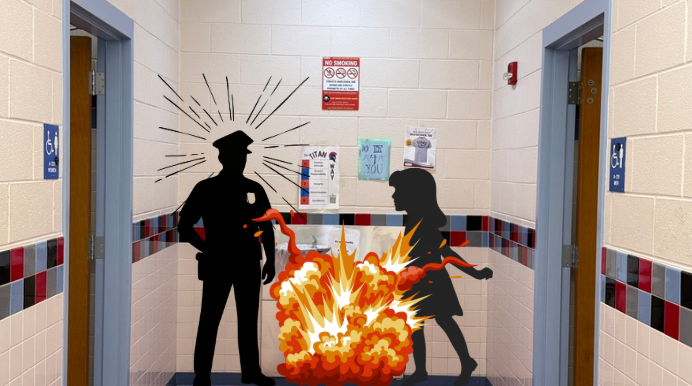


During the first week of March, several students within the school reported symptoms of E. coli infections.
These individuals described the severe stomach cramps, vomiting, and fevers. After a thorough investigation, the E. coli origin traced back to one place on the K. Street Campus: the B-hall bathrooms on the second floor. Every infected student has at least one class on the B-hall of the second floor, and can recall using the bathroom at least once a day. However, these rooms cannot be classified as bathrooms, as according to the OSHA (Occupational Safety and Health Administration), a working bathroom must have flushing toilets, running water, soap, and hand drying options. A Theogony investigation revealed, the B-hall bathrooms are known to meet two of these four conditions on average. An informal survey revealed that 92% of students avoid the bathroom entirely, while the remaining 8% simply “hope for the best.”
Sometimes toilets flush, sometimes they don’t. Sometimes they spray water all over the stall and drenches whomever occupies it. There are days where none of 3 sinks have running water, and weeks where hand soap is nowhere in site. Sounds like just the condition a bathroom would need to be in for the outbreak of a deadly bacteria. In order to sort out this dilemma and prevent it from happening in the future, the B-hall bathroom should be shut down immediately followed by a deep clean. There should also be an assurance that soap and water will be provided. It should not be a luxury that those things be available in a public restroom.
Proposed solutions include providing hazmat suits to students or implementing a “Bring Your Own Soap” initiative, which administrators are reportedly considering as “cost-effective.” At this point, a porta-potty may not only be more sanitary, but also a meaningful upgrade in both reliability and user experience.