
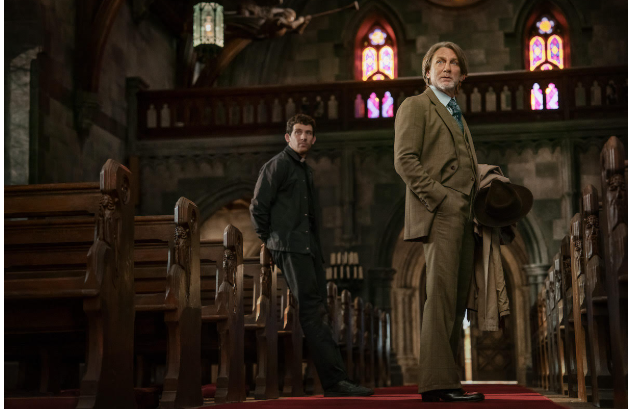
Look out, criminals of the world: Benoit Blanc is back. The highly anticipated continuation of the “Knives Out” franchise, “Wake Up Dead Man,” released in select theatres on Nov. 26 and is now available for streaming on Netflix. Directed by Rian Johnson and starring Daniel Craig reprising his role as private detective Benoit Blanc, the movie is a standalone third installment in the “Knives Out” series, following “Glass Onion” (2022) and “Knives Out” (2019).
The film follows Josh O’Connor as Reverend Jud Duplenticy, a former boxer turned priest who is assigned to a small church in upstate New York after punching a deacon at his previous church. The leader of the church—played by Josh Brolin—is Monsignor Jefferson Wicks, a charismatic but controversial figure whose contentious sermons earn him some enemies. When the monsignor is found dead during a Good Friday service in a seemingly impossible murder, the local police chief Geraldine Scott, who is played by Mila Kunis, brings in Detective Blanc to help solve the case.
Assisted by Reverend Duplenticy and Chief Scott, Blanc investigates Wicks’ most loyal followers, who include Glenn Close as Martha, Wicks’ former assistant, Jeremy Renner as the divorced Dr. Nat Sharp, Kerry Washington as Vera Dravin, a tightly-wound lawyer, Andrew Scott as Lee Ross, a former best-selling author, Cailee Spaeny as Simone Vivane, a concert cellist plagued by a chronic illness and Daryl McCormack as Cy Draven, Vera’s adoptive son and a failed politician. Despite their adoration for the monsignor, Blanc discovers that each of them have dark secrets, and that they all had some part to play—direct or not—in Wicks’ murder.
In typical “Knives Out” fashion, the movie is a fun romp with a story that draws you in the entire time. The truth doesn’t unfold until the very last moment, giving both the characters and the viewers that satisfying “Aha!” moment that completes the experience. The conclusion also makes sense, and while that may seem like the bare minimum for a whodunit, some mystery movies released in recent years have fallen short with unrealistic resolutions that leave the average viewer dissatisfied. “Wake Up Dead Man,” on the other hand, has a climax that makes you say, “Hey, maybe I could have solved that!” while not taking away from the surprise of the reveal.
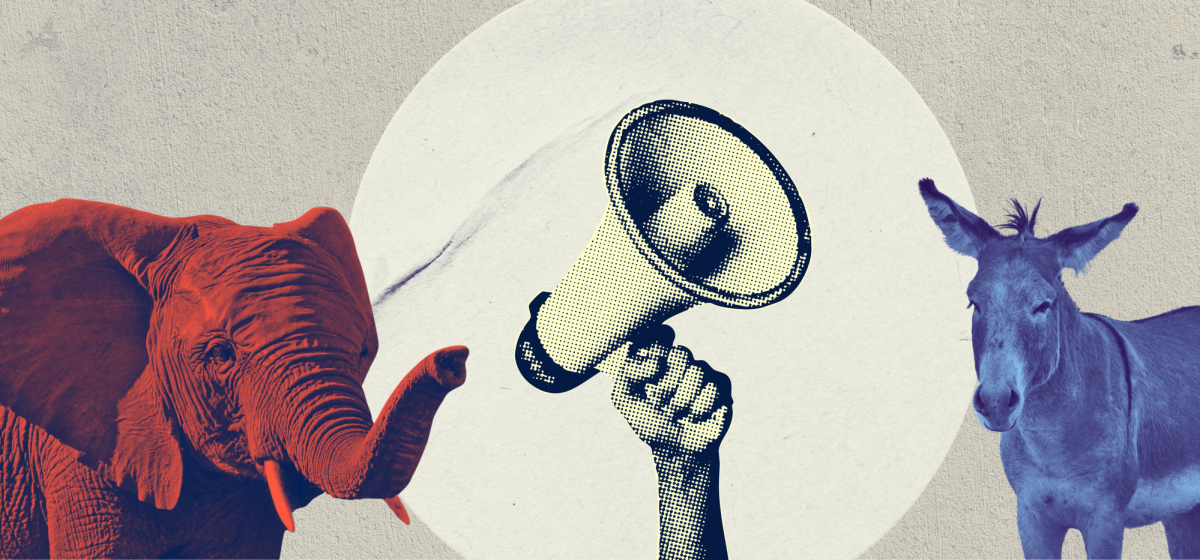
“Wake Up Dead Man” also excels in its political commentary. The relationship between Wicks and his followers can be seen as an allegory for Donald Trump and the MAGA movement. Wicks’ preachings take aim at anyone that he believes goes against “Christian values,” and his followers are so terrified of going against him that they sit and do not question his rhetoric, despite their conscious awareness that he is wrong. In a sequence before his death, Wicks is seen in different sermons directly targeting a single mother, a gay couple, and a woman in a medical mask who are attending his preachings, degrading them so harshly that they walk out in the middle of the sermon. Reverend Duplenticy explains that while in the light of day Wicks’ followers claim that his teachings are not what they believe, and that his behavior is just “Wicks being Wicks,” the expulsion and slander “scratches an itch” of hatred within them. This itch can be seen very clearly in how the MAGA movement draws in its followers: far-right news programs and groups of conservative influencers directly target specific groups of people and degrade them publicly. The hatred they spread attracts a large number of viewers, and begins to change their beliefs, turning away from the communities that they used to love.
The film also criticizes the state of modern Christianity in the United States. Wicks embodies the idea of a “corrupted” church: he intentionally seeks out power and money, not salvation and goodness, and he uses his weaponized sermons and false promises to help people to achieve his unholy ends. For example, one of the suspects, cellist Simone Vivane, has a mysterious chronic illness that ended her professional music career. Wicks had promised to “cure” her through God, so he convinced Vivane to begin donating thousands of dollars to Wicks and the church, ruining her already unstable life and career aspirations. Wicks felt no personal shame for ruining her, and simply wanted the money that she was giving him. Along with his targeted sermons, Wicks’ church is a place of deep hatred and pervasive manipulation, and his death comes as a result of this harm.
However, while much of the content in “Wake Up Dead Man” is deep commentary, a good chunk of the movie is filled with laughable bits. Cy Draven, the failed politician turned conservative influencer, livestreams Wicks’ sermons on YouTube, with titles like “Racism Does Not Exist in God’s Kingdom (USA)” and “There’s G-O-D in DOGE,” a clear jab at far-right political livestreaming and podcasting culture that is common today. Many of the Reverend and the suspect’s church-related jokes brought actual laughs from viewers, and later in the movie, when Blanc has to remove the Reverend from the local jail, the “Cats” soundtrack starts blasting from Blanc’s car, in a gag that temporarily takes the weight of the movie off of the viewers’ shoulders. Jokes like this do well at making the movie humorous for all generations, an improvement from “Knives Out” and “Glass Onion,” the former of which was aimed more at millennials and the latter more for Generation Z.
At its core, “Wake Up Dead Man” is a good mystery movie with an entertaining plot and interesting characters. But the real-world commentary and clever criticism expressed through its writing and acting brings the movie from a good film to a great one.